How the Current System Works
The dominant economic system in most of the world is often presented as synonymous with freedom, democracy, and the best humanity can achieve. But when we look at how it actually functions — not ideologically, but structurally — a different picture emerges.
The pyramid
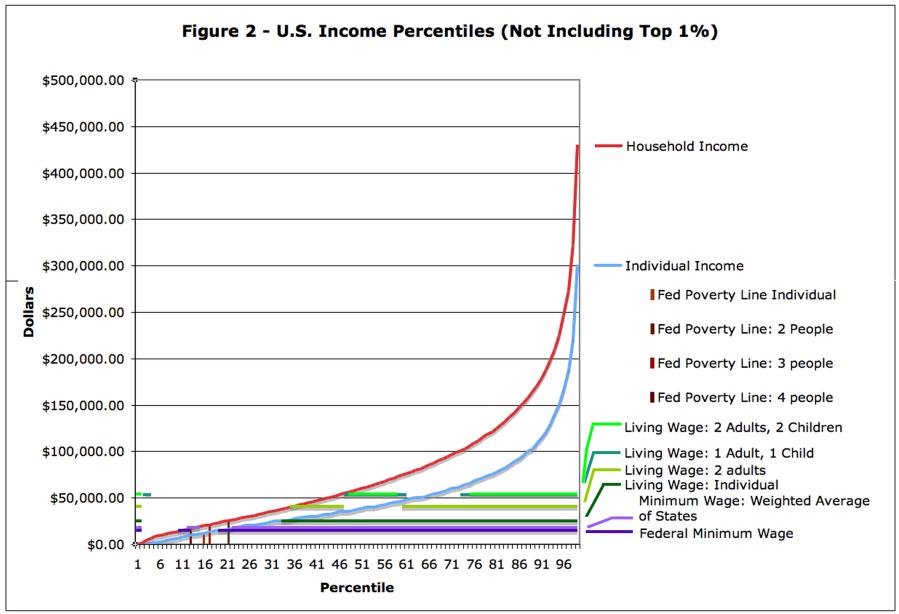
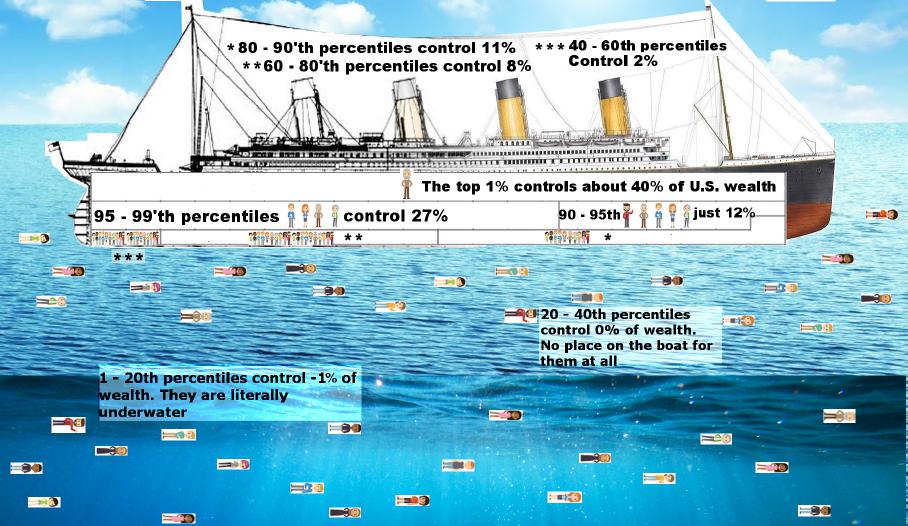
In every currency-based economy, resources are controlled by a microscopically tiny segment of the population at the top of a pyramidal power structure. A slightly larger segment serves and enforces the interests of this group — administering land, labor, and other resources on their behalf. The vast majority of people work for wages set by those above them, pay prices set by those above them, and live in conditions shaped by decisions they had no part in making.
This is not a description of one country or one era. It is the structural consequence of an economic system in which access to basic necessities — food, shelter, healthcare, education — is mediated by currency that must be earned from those who already hold the preponderance of it.
Why wealth concentrates
It takes money to make money. This is not a cynical saying — it is a mathematical reality. Investment returns compound: someone with a million dollars earning a 7% return gains more in a year than most workers earn in total. Someone with a billion gains more in a day. The system is structurally designed so that existing wealth generates more wealth, while labor generates subsistence.
From 1978 to 2024,CEO compensation rose 1,094% while typical worker compensation rose just 26% (Economic Policy Institute). CEOs now earn 281 times what a typical worker earns — up from 21 times in 1965. This is not an aberration — it is the system working exactly as its structure predicts.
The function of money
Currency is presented as a neutral medium of exchange, but it functions as something else: a mechanism of control. When access to every basic necessity requires money, and money can only be obtained by serving the interests of those who already hold it, the entire population is structurally compelled to participate in a system that concentrates wealth and power at the top. Compliance is not achieved through force alone — it is achieved through economic necessity.
Why it matters who's NOT in charge
People often attribute economic problems to particular leaders, parties, or policies. But the structural dynamics described above operate regardless of who holds office. Elections change the people at the controls. They do not change the machine itself.
This is why decades of reform, regulation, and political upheaval have not fundamentally altered the trajectory of wealth concentration, erosion of purchasing power, or the steady conversion of democratic institutions into instruments of economic power. The structure produces these outcomes. Changing the structure is the only intervention that changes the outcomes.
So what could replace it?
If the problem is structural, the answer is also structural. Instead of routing every necessity through currency — "you can have this if you can pay for it" — a different system organizes access directly: "you can have this if it exists and you need it."
In practical terms, this means distribution centers replace retail stores. You see available models, choose what you need, and pick it up or have it delivered. No payment, no billing, no checkout. Grocery stores become food distribution points. Electronics shops become electronics distribution centers. The places and functions stay; only the access mechanism changes.
Without prices as signals, the system tracks what people actually request and use. If many people request bicycles or replacement phone batteries, production increases. If something goes unused, production decreases. This is a feedback loop — similar to how modern supply chains already track demand, but without the price layer that gates access.
To prevent hoarding, reasonable limits apply: one or two laptops, a sensible number of clothing items. Want a new one? Return the old one. This prevents accumulation and black-market reselling while ensuring everyone gets what they need.
Work continues — building, farming, healthcare, engineering, maintenance — but its character changes. Jobs that exist only to serve the money system disappear. Working hours likely decrease. The survival pressure that drives most employment today is replaced by the motivations that already drive open-source software, volunteer work, scientific research, and creative communities: purpose, curiosity, contribution, and recognition.
This is not a utopian fantasy. It is a structural redesign — one that must be modeled, tested, and refined. The question is not whether it would be perfect, but whether it could produce better outcomes than the structure we have now.
Explore what this looks like in detail →
For a thorough, chapter-by-chapter exploration of these dynamics with evidence, examples, and analysis:
Read The Cure — full versionPhase 7B: Converting extractive ownershipDiscussion
Share thoughts on How the Current System Works. Joining the conversation requires a pseudonymous username and password — no email address or real name needed.